The short version
- Put the deposit's purpose in writing before taking payment.
- Identify the customer, vehicle, repair order and current balance for each remote payment.
- File the original payment and subsequent refunds under the same repair order.
- Use evidence relevant to the dispute's specific reason code.
A receipt proves a card payment took place. By itself, it cannot establish the approved repair, the purpose of a deposit, later changes to the work or the delivery date. Keep those facts in the repair record.
Visa's guidance for merchants calls for clear return and cancellation terms, correct payment handling, prompt credits and relevant evidence. A body shop puts that into practice through its repair-order records.
Use with this guide
Job cash flow planner
See how deposits, material bills, labor costs and payment delays affect a job's cash gap. Try four sample jobs, download a CSV or print to PDF.
Parts returns and customer refunds: reconcile both sides of a canceled body-shop line
Track the supplier credit and customer refund separately. Their amounts and timing can differ.
Body-shop disputes: control the submission deadline
Keep collision-shop dispute deadlines and evidence owners visible. Use the submission register to distinguish insurer paperwork from the actual card dispute notice.
Browse the complete auto body guides and worksheets.
Record what the deposit pays for
Explain whether the deposit reserves production time, buys a specific part, starts teardown, covers a deductible or reduces the final balance. State cancellation rights and any nonrefundable portion according to the written policy and applicable law.
Don't use a single receipt label for different payment purposes. Deductibles, parts deposits, storage payments and customer-pay approvals raise different questions. Record the purpose and the staff member who took payment on the repair order.
Give remote customers the details beside the payment link
Explain the amount instead of texting a number alone. Customers paying from an office, rental car or another state cannot see the counter sign. The approved payment page and message must provide the details they need before authorizing payment.
- The customer's name and contact details you can rely on.
- The vehicle's year, make and model, plus its repair-order number.
- The amount due now and its purpose.
- The price options and applicable terms, visible before payment is submitted.
- The date, authorization result, receipt and connected customer messages.
Complete the record when the vehicle is delivered
Match insurer payments, deposits, refunds, the customer's responsibility and the final payment. Retain the signed or acknowledged invoice, receipt, vehicle release and relevant messages. Record any unresolved issue raised at delivery and the agreed next action.
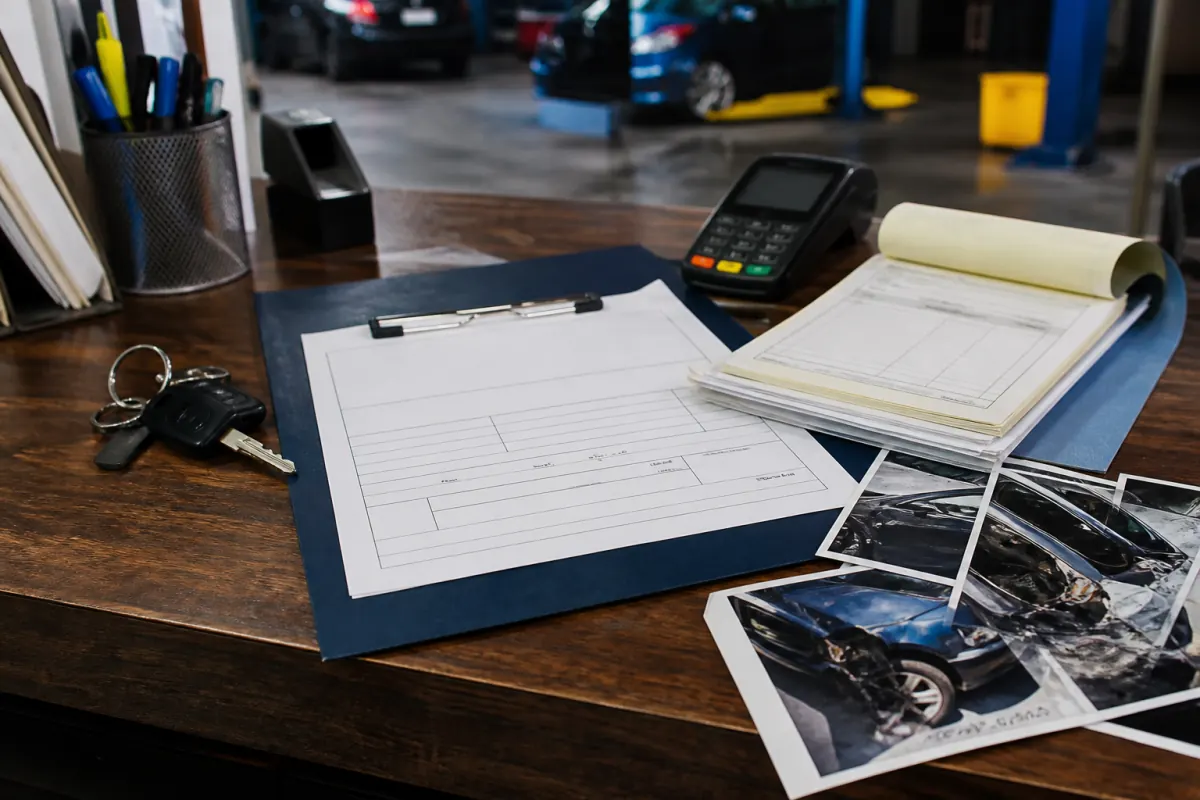
Date photos of the vehicle's condition and completed work, and attach them to the repair order. An organized file explaining each image is easier to use than an unsorted camera roll.
Connect the refund with the original payment
Send an agreed credit promptly using the correct transaction process. Keep the amount, reason, date, original payment reference, revised invoice and customer notice. For a partial refund, identify what is still charged and why.
The ledger, repair order and card settlement report should agree after a refund. Matching those records also prevents a refunded deposit from being deducted again from the final balance.
Respond to the specific dispute reason
An unauthorized-payment claim needs different evidence from a claim about missing work or an unprocessed credit. Read the notice, respond by the deadline and provide concise records addressing that allegation.
Never invent a signature or present a reconstructed conversation as a quote. Leave out unrelated pages. If records are missing, improve the process for future jobs even if that cannot resolve the current dispute.
Questions business owners ask
Will a signed estimate resolve any chargeback?
No. It can support the response, but the allegation, payment authorization, delivery, refunds and other facts also matter.
Can we refund a card payment by check?
Follow processor rules, your written policy and applicable law. Link the refund to the original payment and document any approved exception.
What retention period should we use for payment records?
It depends on processor agreements, tax and accounting obligations, warranty requirements, state law and advice from the shop's counsel. Use a written retention schedule, not just old emails.
Primary sources
BlueFinch last reviewed these sources on August 11, 2026. Payment rules and state requirements can change.
- Visa: Dispute Resolution Guidelines for Merchants
- Visa: Resolve a Dispute
- Federal Trade Commission: Auto Repair Basics
Use this page for general business information. It is not legal, tax, or accounting advice.