The short version
- Winning the sale doesn't remove its processing cost.
- Calculate with contribution per completed sale, not total ticket value.
- Try both low and high margins.
- Read the result as arithmetic, not a prediction.
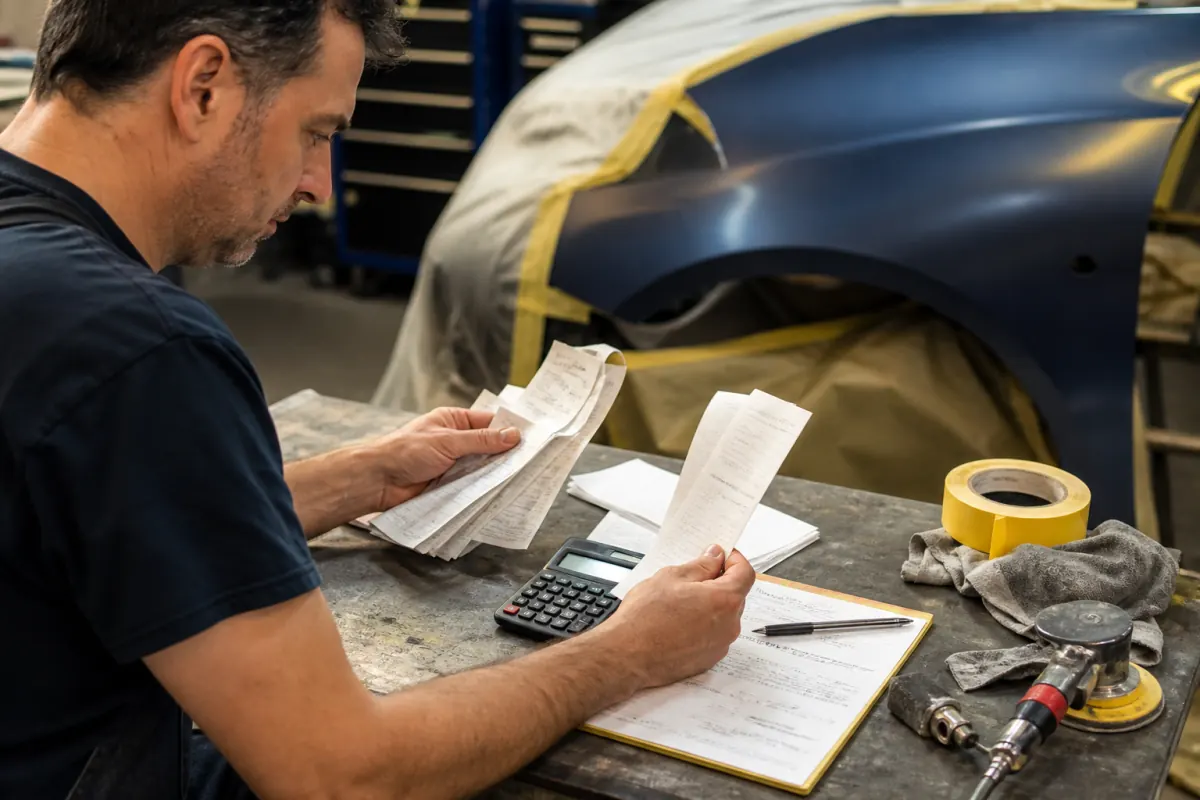
Collision repairs take physical work, skill and substantial costs. Card fees apply to the full payment, even though only part of the repair total is profit.
Compare card fees with what remains after parts, materials, labor, sublet work and overhead. Work through a recent body shop sale with its payment records.
Interactive owner tool
Body Shop Profit-Recovery Tool
Calculate the completed sales needed to earn back a month's card cost.
- Monthly collected revenue: example input 120000
- Share paid by card: example input 45
- Effective processing rate: example input 3.54
- Average completed sale: example input 1500
- Contribution per completed sale: example input 150
Change the inputs on the live page. The calculator runs in your browser, using only the values you enter.
Use with this guide
Body shop paint material recovery: match billing to consumed cost
A supplier invoice shows stock purchased. The repair order needs materials consumed on that job. Match those costs before calculating recovery.
How many lost repairs would erase a body shop's payment-program savings?
Check remaining costs and any genuinely lost contribution before judging a lower processing bill.
Browse the complete auto body guides and worksheets.
Check your own costs: calculate your effective processing rate or upload a merchant statement for analysis.
Work out how many sales would cover the card bill
The example compares a monthly card bill of $1,912 with the contribution from one completed sale. Update the revenue, card share, rate, average ticket and contribution together. An overly optimistic margin can make the calculated number of replacement sales meaningless.
A processing percentage can seem small until you compare it with jobs, labor hours, appointments or gross profit. This worksheet compares the monthly card bill with what one completed sale contributes, showing the cost in terms of work.
For body shops, use the right payment totals. Only include money processed through the merchant account. Insurer checks, insurer ACH, financing proceeds and other non-card receipts are not card volume.
Work through "how card fees cut into body shop profit" with a real transaction
Estimate monthly and annual card expense, cost per customer-pay repair and the share of your body shop's retained contribution used by fees.
Compare card fees with what remains after parts, materials, labor, sublet work and overhead. Review a completed body shop sale, not just a demonstration. Have the original amount, payment method, customer terms, changes, receipt, settlement record and any later adjustment beside you.
- For How Card Fees Cut Into Body Shop Profit, the "show choices before approval" step: Put payment choices on the customer's estimate before work is authorized. A sign beside the terminal alone isn't enough. Identify the screen, document and person responsible for this step.
- For How Card Fees Cut Into Body Shop Profit, the "record the deductible or deposit" step: Note who paid, their payment method, what it covers and whether your written policy makes it refundable. Identify the screen, document and person responsible for this step.
- For How Card Fees Cut Into Body Shop Profit, the "update after a supplement" step: When the approved repair changes, update the customer balance, insurer amount, invoice and payment request together. Identify the screen, document and person responsible for this step.
- For How Card Fees Cut Into Body Shop Profit, the "match delivery and refunds" step: Keep the final invoice, terminal amount, receipt, release record and later refunds in the same transaction history. Identify the screen, document and person responsible for this step.
Work with the Body Shop Profit-Recovery Tool
Keep your source reports beside the tool. The tool estimates monthly card volume, applies the effective rate, then divides that cost by the contribution from a sale. The result tells you how many extra completed sales would be needed to earn back the card expense.
- Revenue collected in the month
- Percentage of collected sales paid by card
- All-in effective processing rate
- Average value of a completed sale
- Contribution or retained profit from each completed sale
Body shop: profit-impact review steps
Follow a recent body shop sale through this table. It lists the industry's usual handoffs; replace the labels with the documents or screens your team uses.
| Stage | What to verify | Purpose |
|---|---|---|
| Show choices before approval | Put payment choices on the customer's estimate before work is authorized. A sign beside the terminal alone isn't enough. | File the profit-impact review record here. |
| Record the deductible or deposit | Note who paid, their payment method, what it covers and whether your written policy makes it refundable. | File the profit-impact review record here. |
| Update after a supplement | When the approved repair changes, update the customer balance, insurer amount, invoice and payment request together. | File the profit-impact review record here. |
| Match delivery and refunds | Keep the final invoice, terminal amount, receipt, release record and later refunds in the same transaction history. | File the profit-impact review record here. |
What to save for the profit-impact review
File these records while you can still trace the sale easily. A refund, cancellation, failed collection or dispute makes missing records much harder to reconstruct.
- Three complete merchant statements
- Sales reports for those months
- Completed-job or appointment count
- Totals for refunds and cancellations
- Margin assumption with its source
What BlueFinch would check for body shops
BlueFinch would use the same body shop payment mix to compare all proposed percentage charges and fixed fees. Monthly, PCI, gateway, batch, chargeback, software and other account-specific costs may still apply.
BlueFinch currently offers a standalone terminal at no charge, without an equipment lease, long-term contract or cancellation fee. Eligible, configured credit and debit transactions can have a 0% merchant processing rate after review of the state, network, acquirer, written price display and payment channels.
Questions business owners ask
Why enter the contribution from a completed sale?
The owner doesn't keep the whole ticket amount. Using contribution gives a better estimate of the completed work needed to earn back the processing expense.
Is the example margin typical for body shops?
No. The defaults are labeled examples. Use your own reports to document both a low and a high case.
When do body shops need help with the review?
Pause if the statement, written price, customer documents, terminal or receipt disagree. Before the body shop launches, its processor or acquirer should approve the specific setup.
Primary sources
BlueFinch last reviewed these sources on August 11, 2026. Payment rules and state requirements can change.
- Visa: Merchant Surcharging FAQs
- Mastercard Rules
- Visa: Resolve a Dispute
- National Association of Insurance Commissioners: Auto Insurance Shopping Tool
Use this page for general business information. It is not legal, tax, or accounting advice.